Can a Land Rover Defender tow
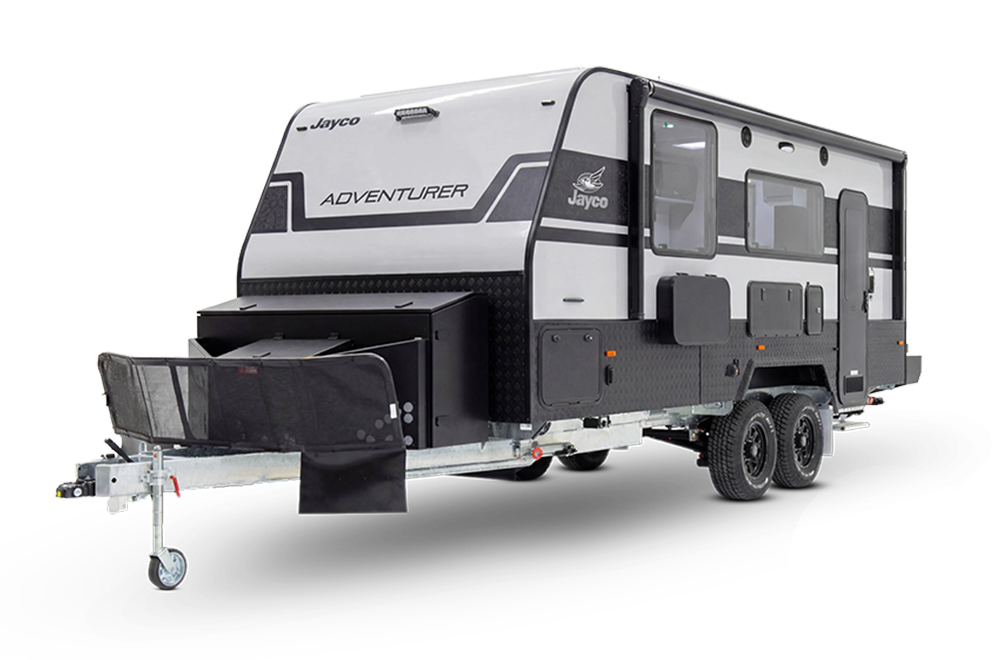
a Jayco Australia Adventurer 48V?
110 / 130 (D300) (2020), checked against the manufacturer's published figures.
Close to the limits
The Jayco Australia Adventurer 48V's published ATM of 3,221kg sits 279kg under the Land Rover Defender's 3,500kg braked towing rating.
- Braked towing ratingThe Land Rover Defender, manufacturer published
- 3,500kg
- Towball ratingThe Land Rover Defender, manufacturer published
- 350kg
- ATMThe Jayco Australia Adventurer 48V, maximum loaded weight, manufacturer published
- 3,221kg
- Ball weightThe Jayco Australia Adventurer 48V, manufacturer published
- 228kg
Figures are the manufacturer's published ratings.
Possible, but close to the limits
Loaded to its published ATM, the Jayco Australia Adventurer 48V uses all but 279kg of what the Land Rover Defender is rated to tow, so there is little room left for what you pack.
This is a guide off published figures, not a compliance check.The legal numbers are the compliance plates on your car and the van. Weigh the loaded rig at a public weighbridge to know for sure, then read the ticket.
Published figures are where a trip in the Land Rover Defender with the Jayco Australia Adventurer 48V starts, not where it ends. What you pack, and what is already bolted to the car, moves the real numbers from the day you hitch up.
Free quote, no obligation.Takes about 2 minutes.
Jade Finance is our finance partner. If you finance through them, Jade pays us a commission.It's part of what keeps this site free. About us
Land Rover Defender
110 / 130 (D300) (2020)
Jayco Australia Adventurer 48V
Starting from $103,285
Always check your compliance plate
Online databases use factory-standard specs. They don't know about your bullbar (adds weight), suspension upgrades (can change GCM), or how much you're carrying.
How to find it
Open your passenger or driver door. Look for a silver or black metal plate riveted to the pillar. This plate overrides everything you read online.
Why the numbers move once you load up
The figure most often left out of the sum is payload, which is everything you add after the vehicles leave the factory.
- • Bullbar and winch: both add weight to the front of the car, and it comes out of your payload.
- • Passengers: everyone in the car comes out of its payload, not just the driver.
- • Tow ball mass: this comes out of your car's payload, not just your towing limit.
Always weigh your rig fully loaded.
This pairing is inside the published ratings, with not much room left.
Improve your stability
The published weights sit close together here. A weight distribution hitch spreads some of the towball load onto the car's front axle, which is what the ball weight takes off it.
Some links in this section may be affiliate links. If you make a purchase, we may earn a small commission. This helps us keep the site running and continue providing free guides.
Other caravans a Land Rover Defender can tow
Every van here sits inside this car's published ratings, or close to them.
Other cars that can tow the Jayco Australia Adventurer 48V
Each one is rated for this caravan, or sits close to the limit.
- Land Rover Defender110 / 130 (Tdi / Td5 / Puma), tows 3,500 kg brakedClose
- Toyota HiLuxRogue / SR5 / SR (2.8L Auto 4x4), tows 3,500 kg brakedClose
- Toyota LandCruiser100 Series (4.2L Turbo Diesel), tows 3,500 kg brakedClose
- Toyota Prado250 Series (New Gen), tows 3,500 kg brakedClose
- Toyota TundraLimited (Official Aus RHD), tows 4,500 kg brakedComfortable
- Ford EverestNext-Gen (V6 Platinum / Sport), tows 3,500 kg brakedClose
Treat this as a guide off published figures, not a compliance check.The legal numbers are the compliance plates on your car and the van, and where we do not hold a published ball weight we estimate it at 10% of ATM.Weigh the loaded rig at a public weighbridge to know for sure, then read the ticket.
Every figure here describes the two vehicles as they left the factory. Yours has a history since then, and the plates on it are what that history gets measured against.